Working Together for Healthy Forests, Watersheds, and Communities
Project Overview
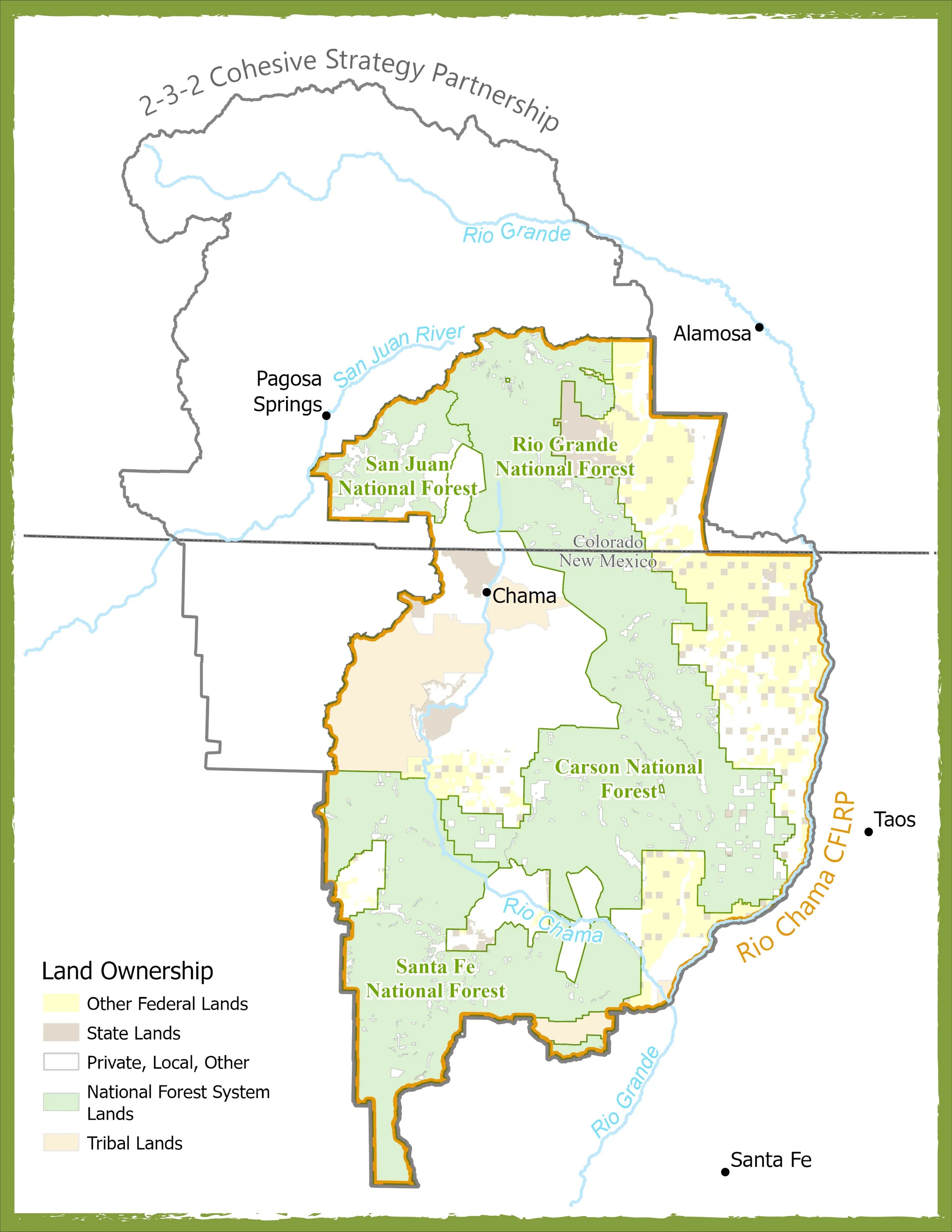
The 10-year, landscape-scale Rio Chama Collaborative Forest Landscape Restoration Project (CFLRP) is part of a broader effort by the U.S. Department of Agriculture’s Forest Service (Forest Service) to enhance forest health while reducing risk of destructive wildfire, provide clean abundant water, strengthen communities, and boost rural economies. Spanning 3.8 million acres across southern Colorado and northern New Mexico, the CFLRP builds on existing partnerships to increase resilience through collaboration, active forest management, and long-term monitoring.
The 2-3-2 Partnership serves as the CFLRP’s designated collaborative group. While funds from the Forest Service are reserved for work on federal land, the project supports work across all lands. Dollars are leveraged to secure funding for collaborative engagement, cross-boundary project design and implementation, and landscape monitoring facilitated by the 2-3-2.
Non-National Forest System lands, including tribal nations, state and municipal lands in Colorado and New Mexico, plus private and other federal lands, make up nearly half of the CFLRP area.
National Forest System lands are on the
San Juan
Rio Grande
Carson, and
Santa Fe National Forests.
-
Reduce risk of destructive wildfire and restore resilient forests
Improve watershed function and water quality
Enhance range conditions and wildlife habitat and connectivity
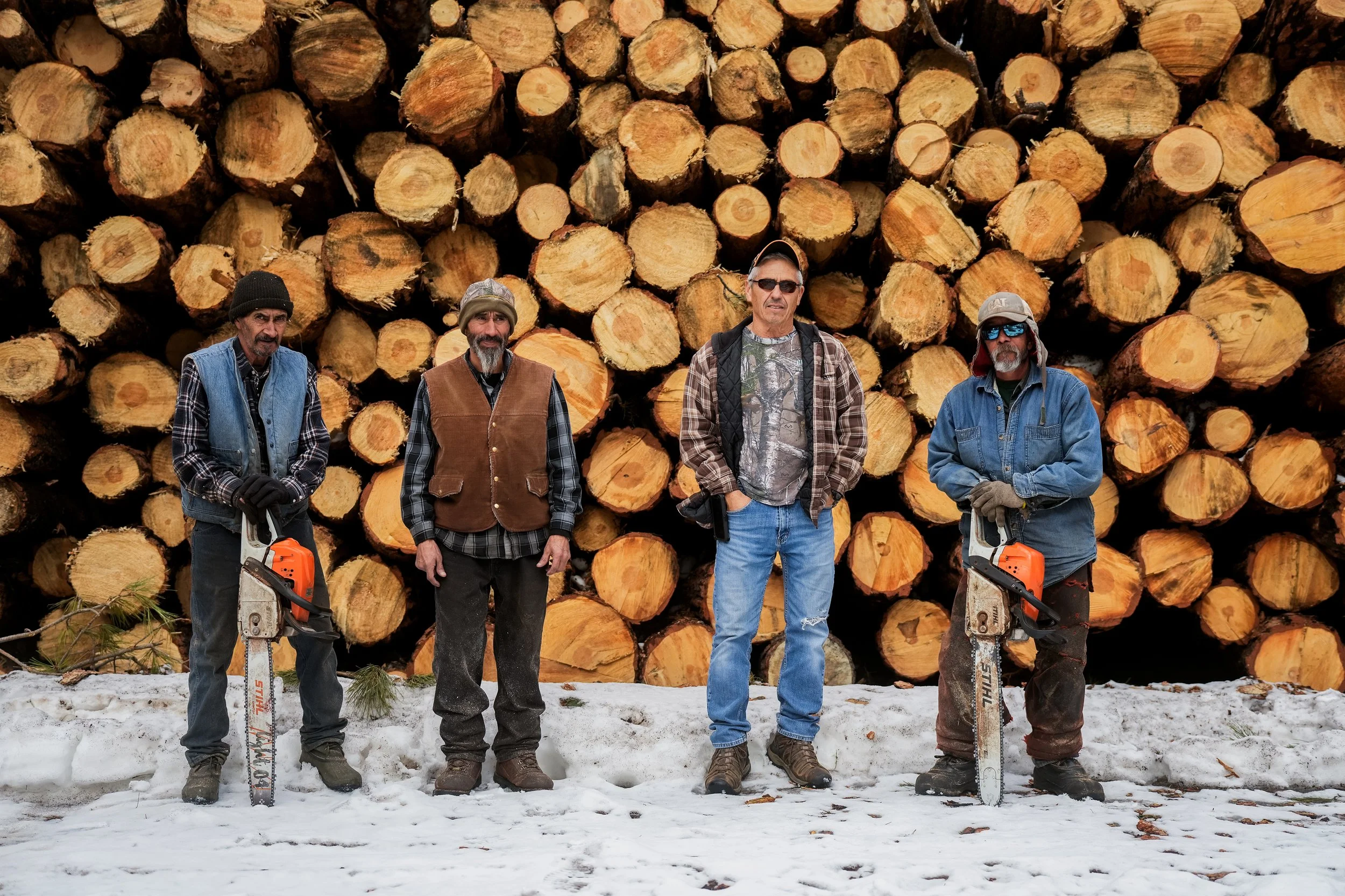
Support local rural economies through job creation and wood utilization
Build environmental resilience and adapt to changing conditions
Strengthen relationships with Tribes, traditional, and local rural communities
-
Santa Clara Tribal Forest Protection Act Workforce Development with Santa Clara Pueblo (Santa Fe NF)
Rock Creek Wood for Life with the National Forest Foundation (Santa Fe NF)
Rio San Antonio Watershed Restoration with Trout Unlimited (Carson NF)
Good Neighbor Authority Forest Health Projects with Colorado State Forest Service (Rio Grande NF)
Blanco Basin Cross Boundary Work with the Forest Stewards Guild and others (San Juan NF)
View the National Dashboard for the Most Up to Date Accomplishments
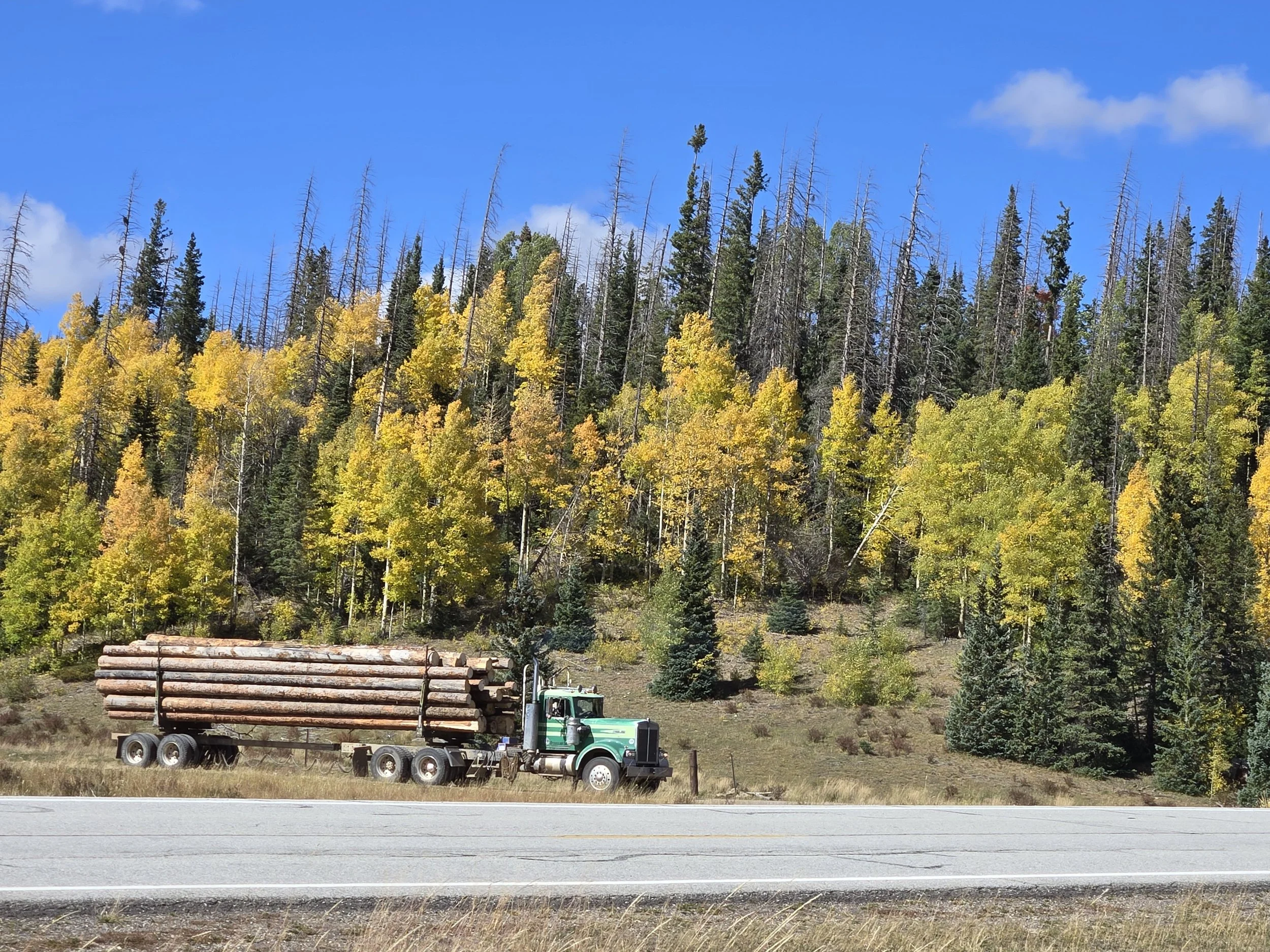
Active Forest Management in Action
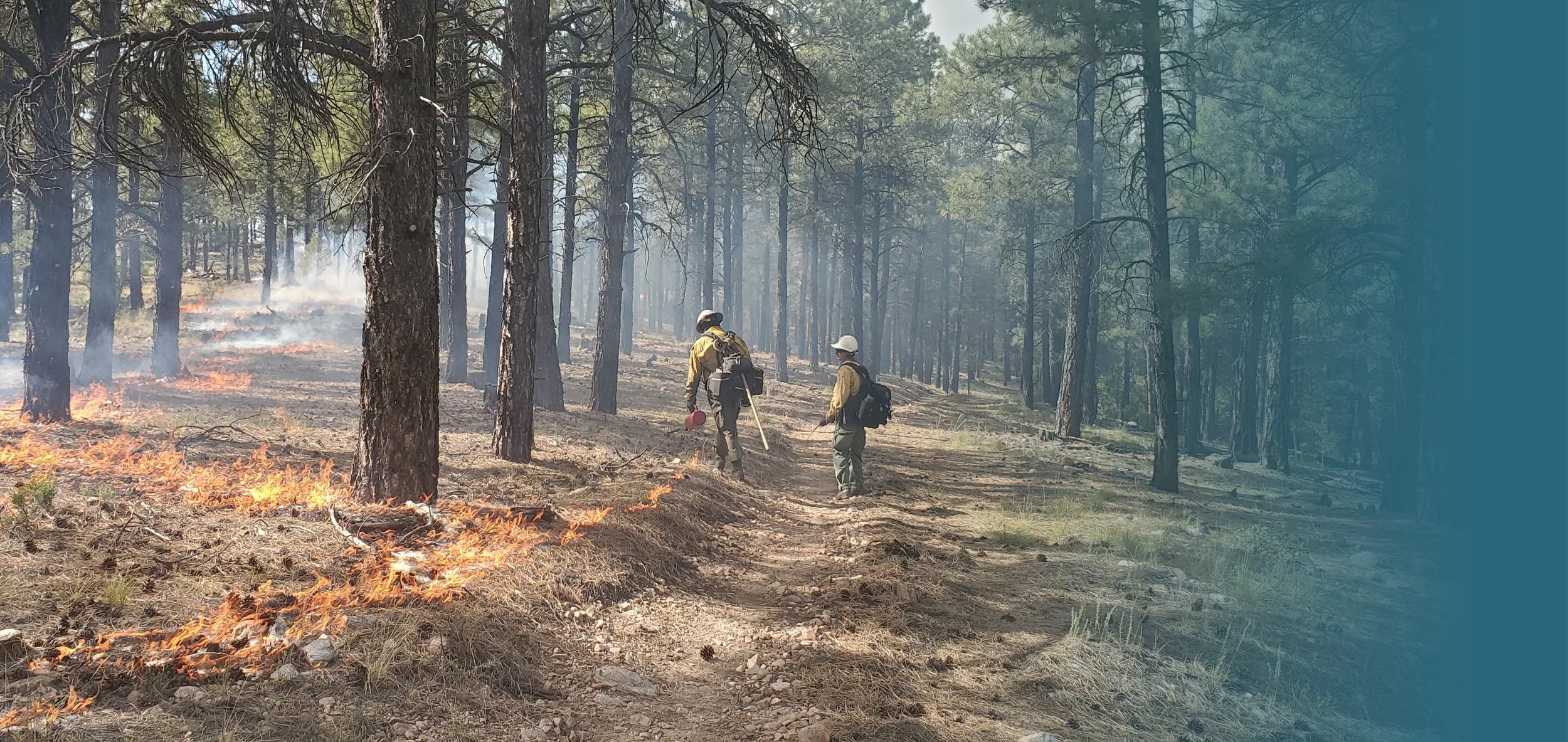
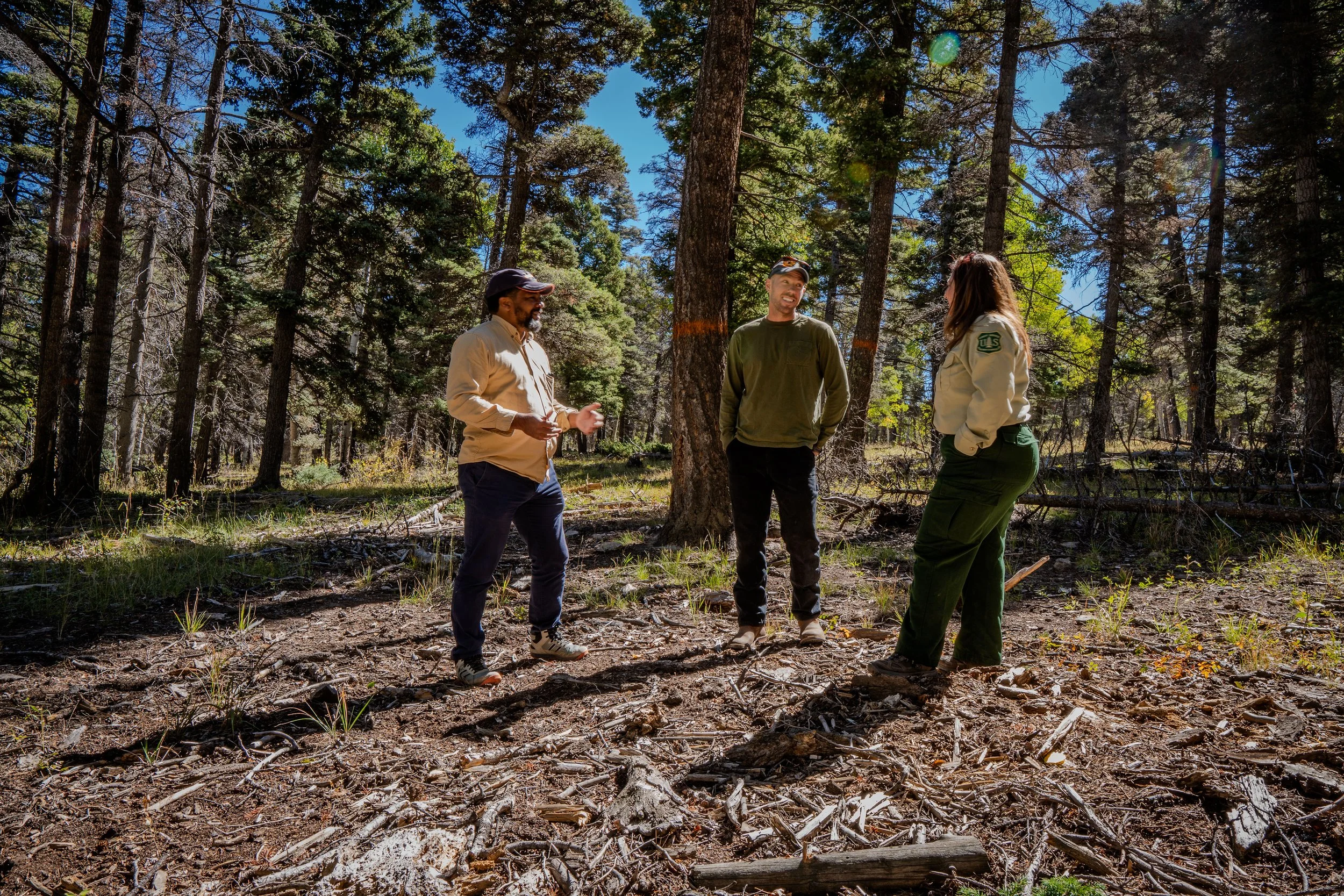
Active management means direct human intervention – such as forest thinning, timber harvests, prescribed fire, and restoring watersheds and wildlife habitat – to maintain forest health, secure water supplies, and reduce risk of destructive wildfire.
The Rio Chama CFLRP uses strategic active forest management to achieve ecological and economic goals, improving safety and well-being across the landscape. The project is driving change by investing $30 million (2022–2031) and leveraging additional resources and partnerships to increase the pace and scale of active management and support rural economies.
All CFLRP funding must be allocated to contracts or agreements. A ten-year treatment plan outlines the types of work anticipated to be completed on either National Forest System land, non-NFS land, or both.
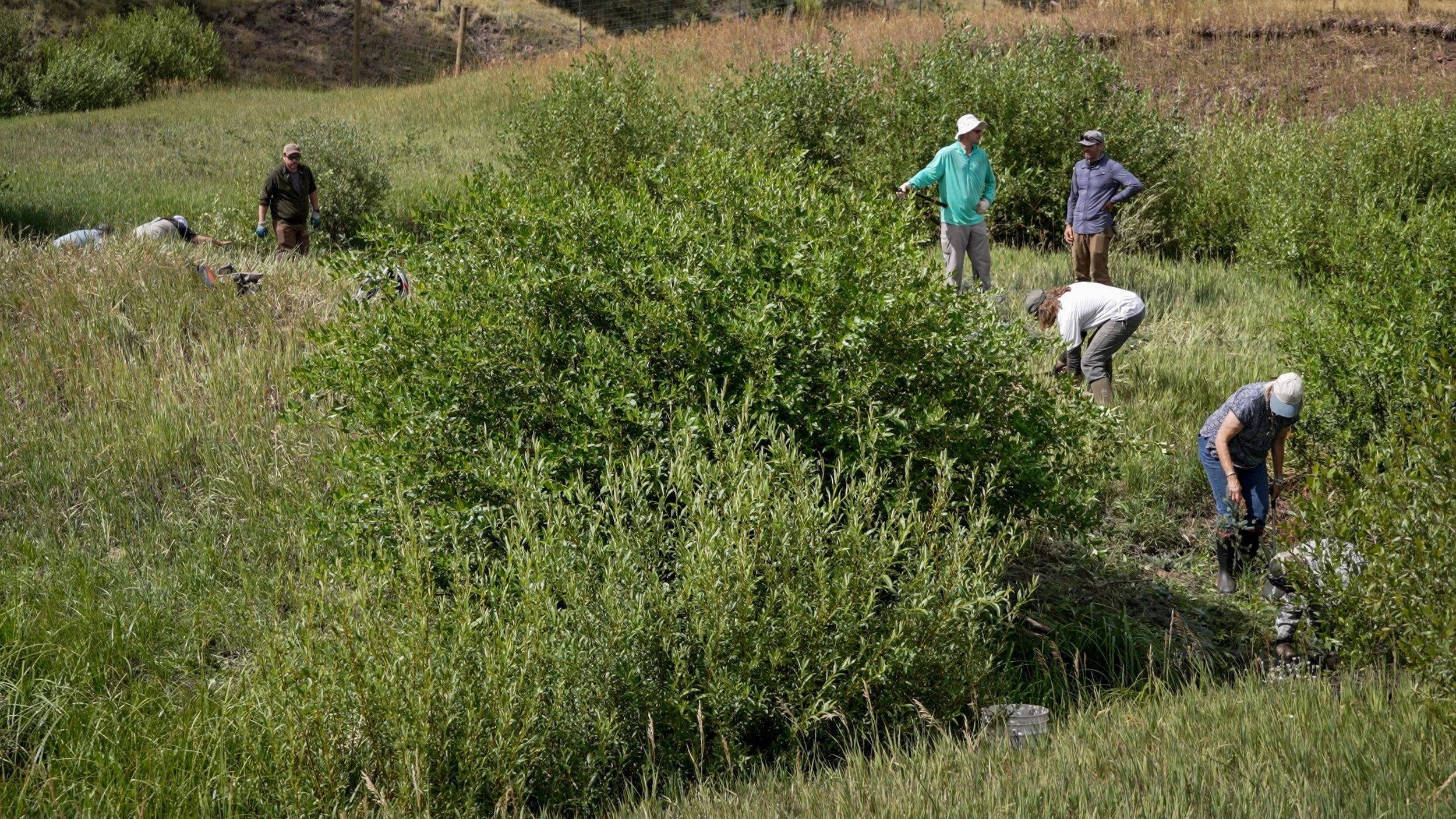
Governance
The CFLRP is governed by a “Board of Forest Supervisors,” providing collaborative leadership, management, and strategic direction for the Rio Chama CFLRP. The Board includes a Chair (currently the Santa Fe National Forest Deputy Forest Supervisor), the Rio Chama CFLRP Coordinator, a representative from the 2-3-2 Partnership, and the four Forest Supervisors of the Santa Fe, Carson, San Juan, and Rio Grande National Forests. In decisions, the CFLRP Coordinator and each forest get one vote.
The CFLRP Coordinator serves on the 2-3-2 Executive Committee and coordinates with Forest Service staff, stakeholders, and partners to manage and implement the interrelated projects that make up the CFLRP program of work. The Rio Chama CFLRP Working Group supports this role by providing a space for Forest Service and Forest Stewards Guild staff to discuss projects, program activities, reporting, and emerging challenges and opportunities.
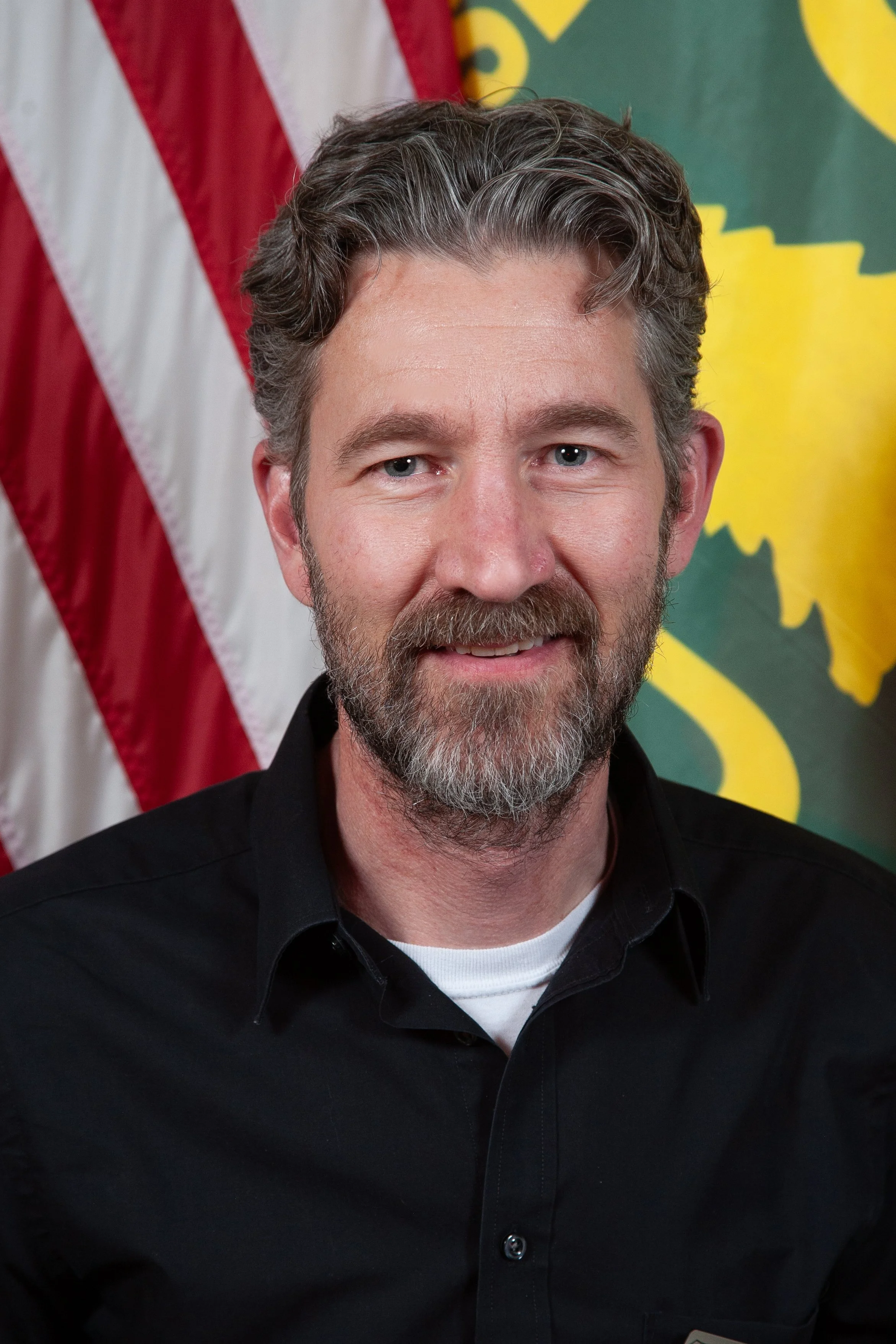
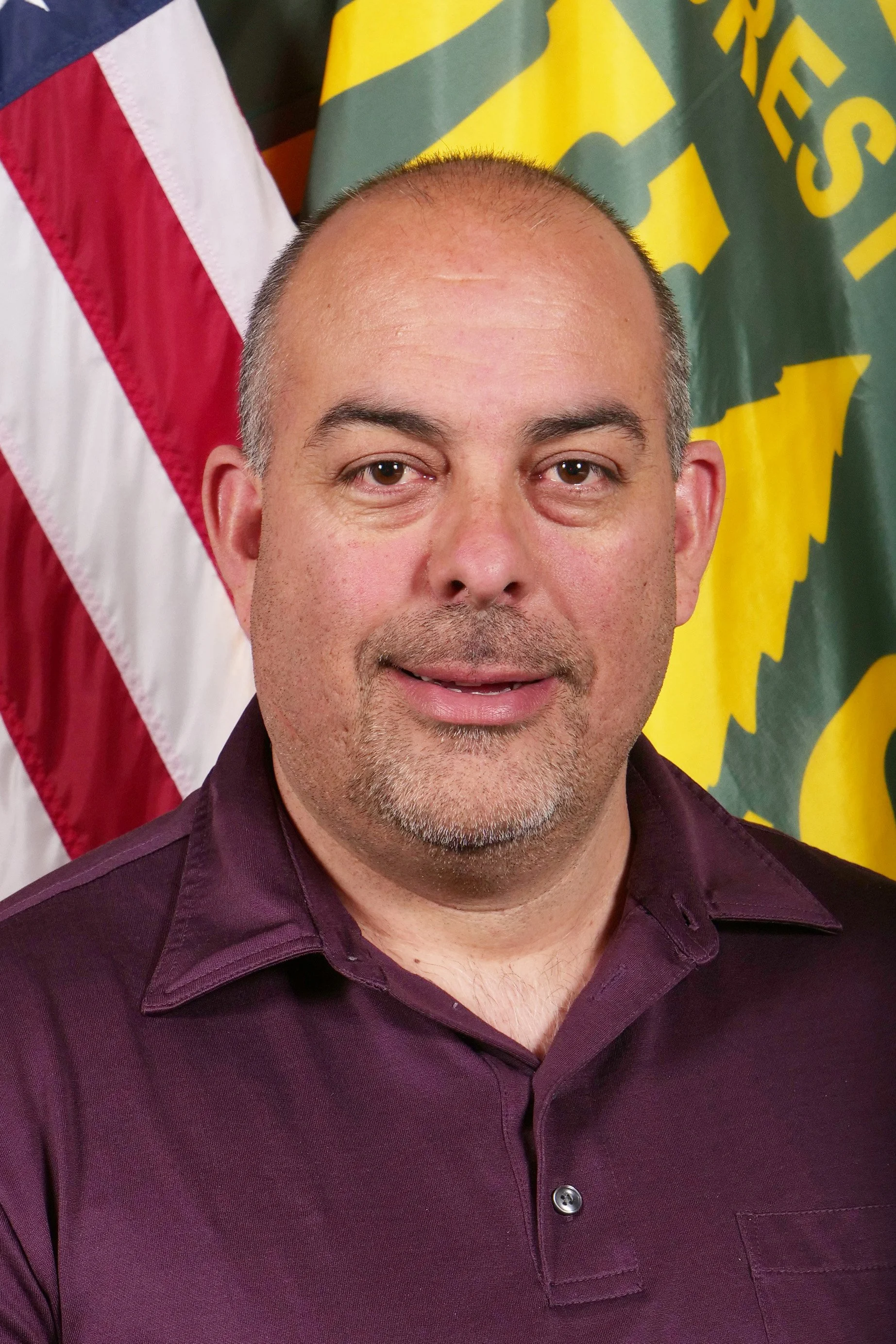
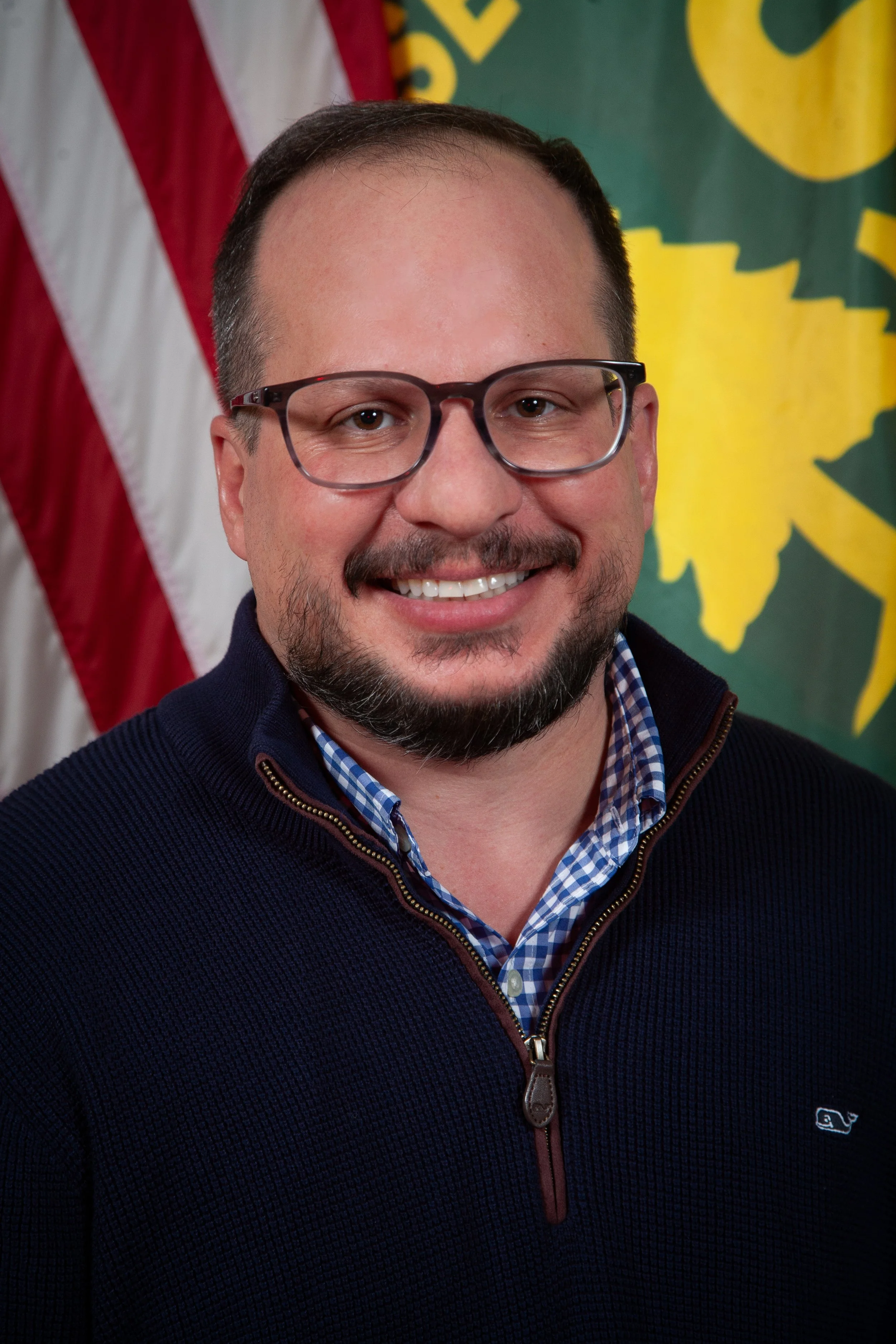
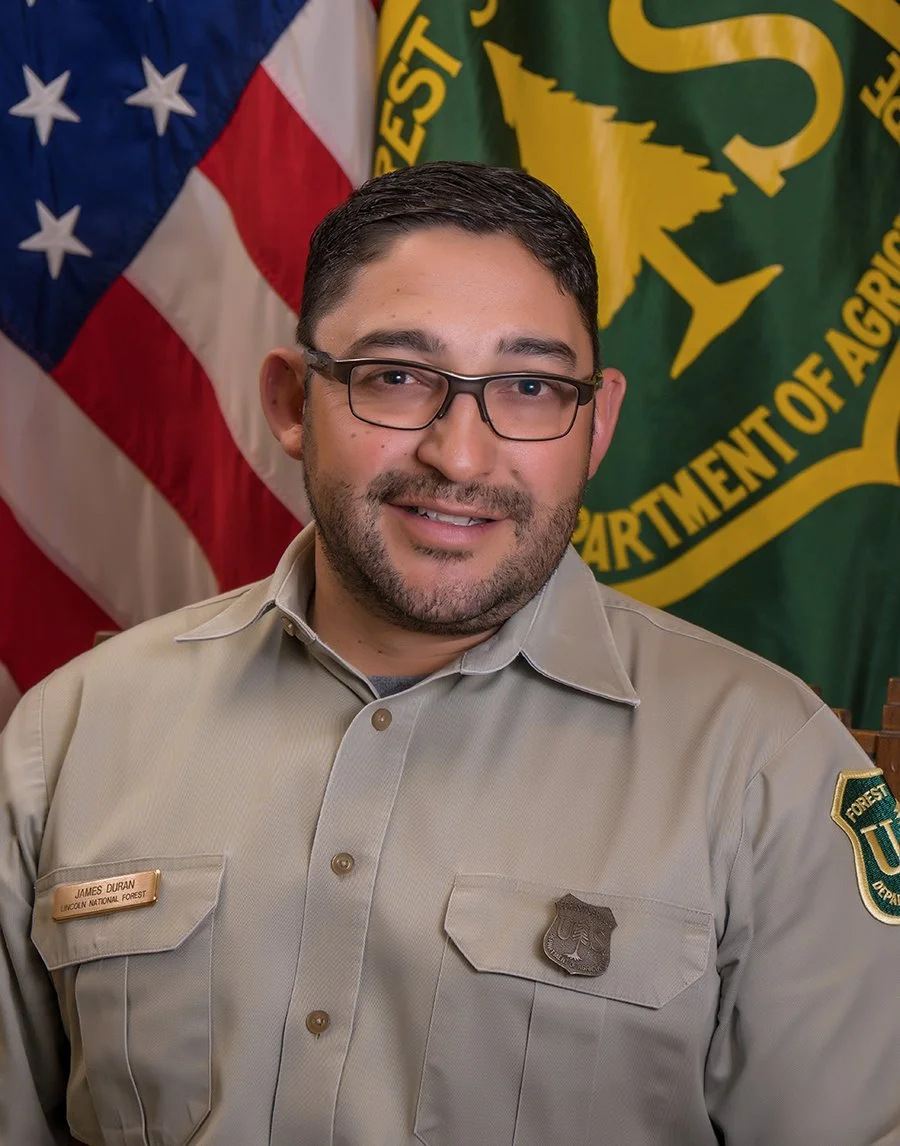
Meet the Board of Forest Supervisors ↓
-
![Close-up of a middle-aged man with gray and brown hair and a beard, wearing a black shirt. In the background, parts of the American flag and a green and yellow emblem are visible.]()
Zack Parsons
Santa Fe National Forest
-
![A man with a shaved head and a small beard, wearing a dark purple collared shirt, standing in front of an American flag and a yellow and green patriotic banner.]()
Anthony Madrid
Santa Fe National Forest
-
![Close-up of smiling man with glasses, beard, and mustache, wearing a zipped navy sweater over a checkered shirt, background features American flag and a green banner with yellow design.]()
Dennis Kuhnel
Rio Grande National Forest
-
![A man in a forest ranger uniform standing in front of American and green vegetation department flags.]()
James Duran
Carson National Forest
-
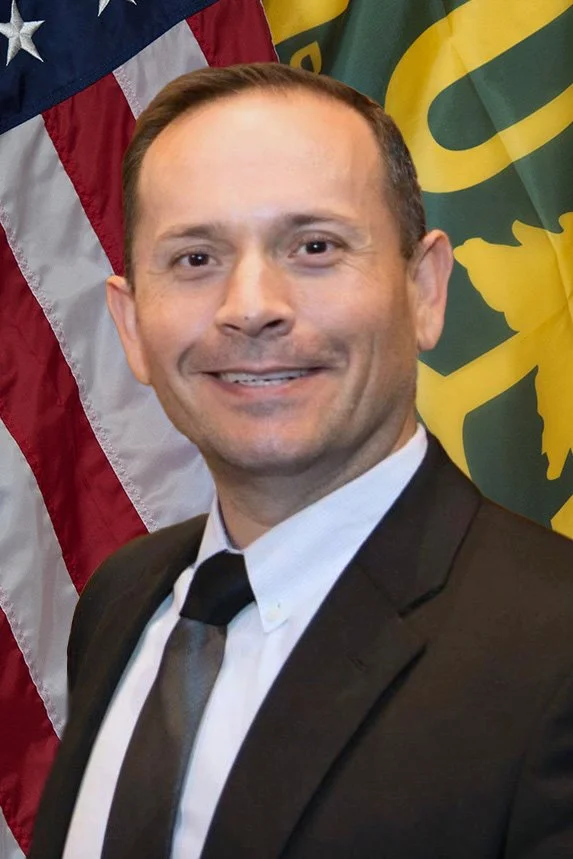
![A man in a black suit, white shirt, and black tie smiling, standing in front of an American flag and a green flag with a yellow emblem.]()
Shaun Sanchez
Santa Fe National Forest
-
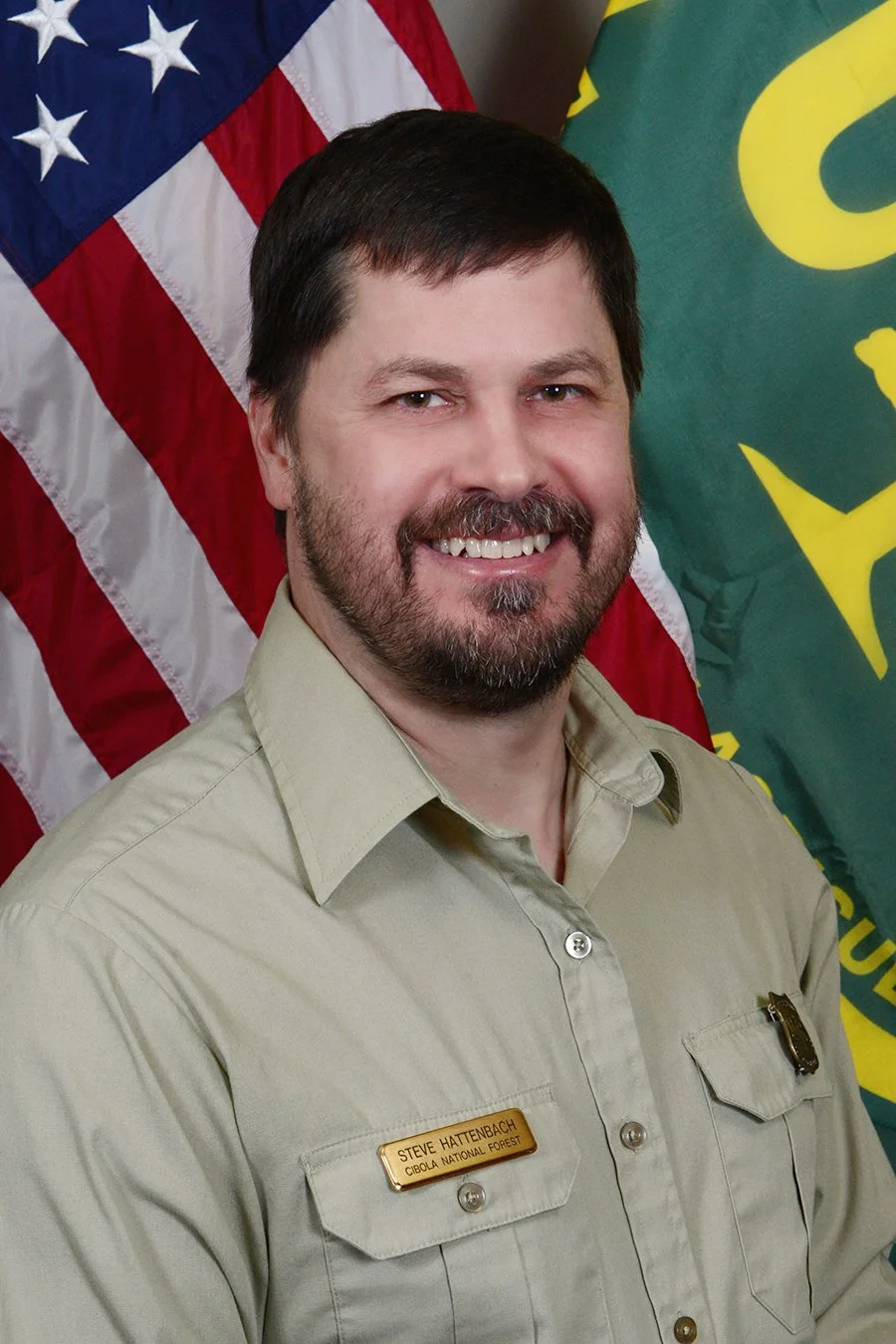
![Photograph of a man with dark hair, beard, and mustache, wearing a beige uniform shirt with a name tag and badge, standing in front of American and Washington state flags.]()
Steve Hattenbach
San Juan National Forest