Cross-Boundary Connectivity: When the Work Has No Borders
When we work together, we develop creative and implementable solutions unbound by perceived boundaries.
Overview
Cross-boundary work happens at all scales of the 2-3-2 and in many forms. Cross-boundary means cross-fenceline, cross-state, cross-mountain range, cross-jurisdiction, cross-silo, cross-organization, cross-you name it. We know that wildfires, waterways, and wildlife do not stop at village boundaries or state lines. 2-3-2 Partners work within their communities, within their watersheds, and within our shared landscape to design projects that reduce the impacts of wildfire on water flow, wildlife movement, and people.
In the 2-3-2 Partnership we believe it is our shared responsibility to promote healthy forests and watersheds. We must work cross-boundary. Cross-boundary projects require shared trust, creative thinking, adaptive funding, and collective responsibility.
Blanco Basin Fuelbreak
The Blanco Basin in southern Colorado is a headwater valley of the San Juan River, and includes the Oso Diversion where water is pumped through the mountain into the Rio Chama. Forest health in the Blanco Basin directly impacts water availability and the timing of water delivery. The basin is also home to multiple families, with only one road in and out of the valley. Fuelbreaks are strategically placed fuels reduction projects that improve road travel, increase firefighter and homeowner safety, and slow wildfire progression during active fire events.
Execution
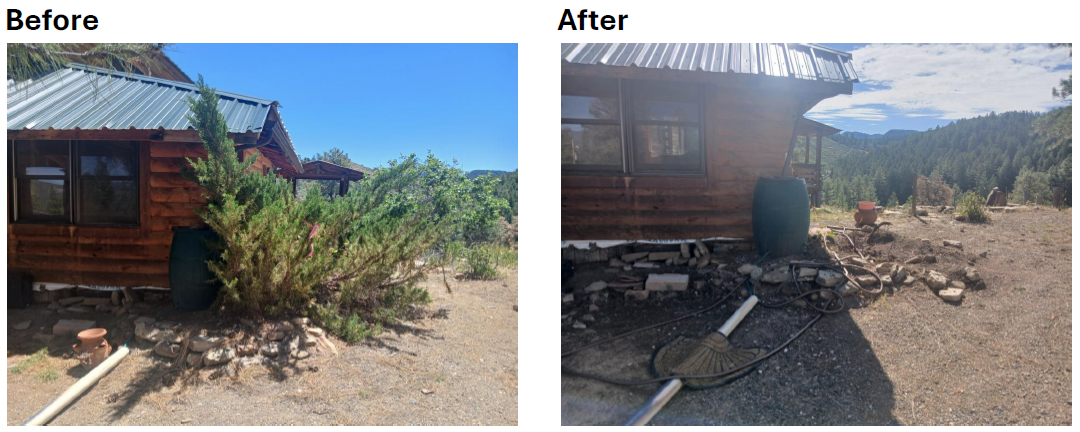
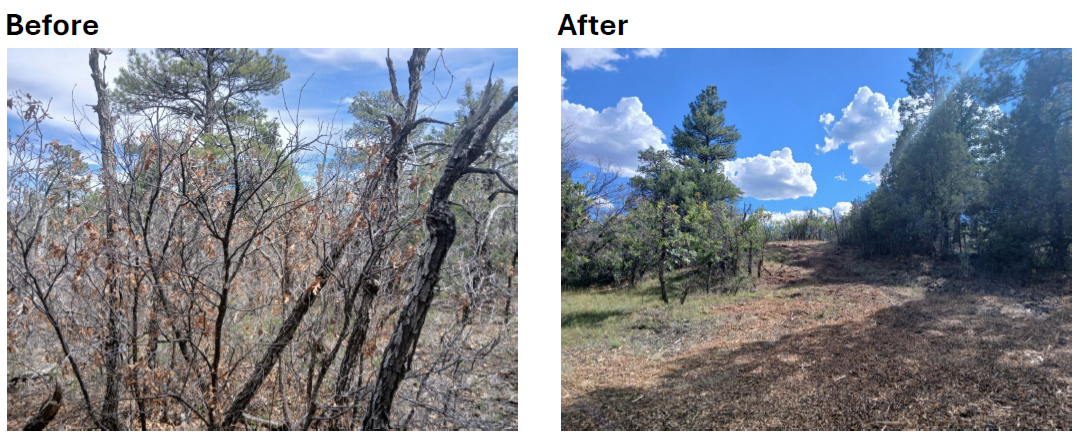
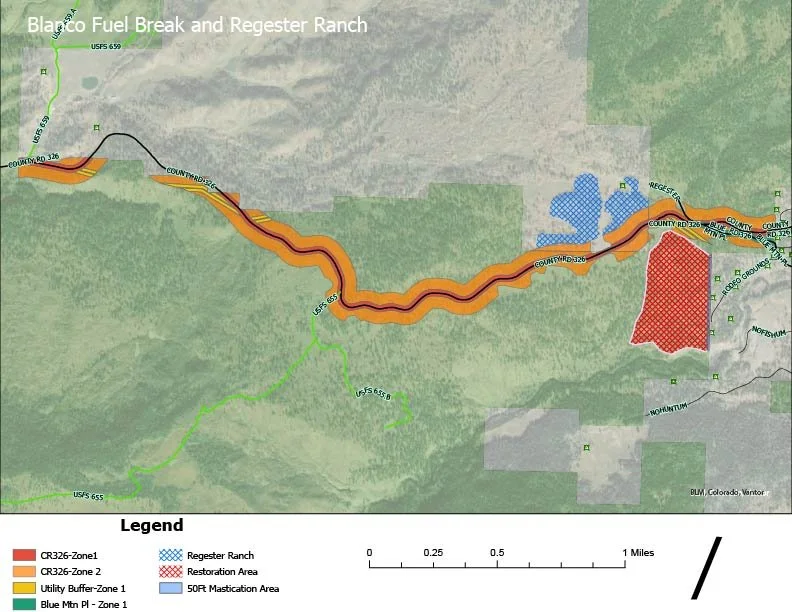
The Blanco Basin cross-boundary fuelbreak is the result of many years of planning and trust building among 2-3-2 Partners. Work began when a private landowner worked with Wildfire Adapted Partnership to create defensible space around their structures. The Forest Stewards Guild applied Inflation Reduction Act funding to clear excess fuels on the same private lands around powerlines and along the main county road. The San Juan National Forest applied Rio Chama CFLRP funds to extend the powerline and roadside thinning. In total, the 217 acre fuelbreak includes 37 acres of private property deliberately paired with work on US Forest Service managed lands for continuity and increased effectiveness. A local contractor completed the fuels reduction work and the removed biomass supported the local mill. The cross-boundary fuelbreak has been coordinated with the local Homeowners Association with potential to incorporate other funding sources to expand the work onto more adjacent private lands.
-
The cross-boundary fuelbreak is a critical project to protect Bureau of Reclamation water infrastructure and homes when a wildfire occurs in the Blanco Basin. The fuelbreak was designed by local fire managers to make travel safer during a wildfire and reduce wildfire impacts on the people and water in the upper San Juan River. The relationships built in the 2-3-2 Partnership over the past 10 years, combined with funding from the Rio Chama CFLRP, made this cross-boundary fuelbreak possible. This is an example of how collaboration goes slow to go fast — we built trust with each other over time so that when funding is available, we can co-develop complex, highly impactful forestry work.
San Luis valley good neighbor authority
Good Neighbor Authority (GNA) is a legislative tool that enables federal agencies to partner with state, county, and tribal governments. In the San Luis Valley, CO, the Rio Grande National Forest (RGNF) and Colorado State Forest Service (CSFS) are using GNA to address outbreaks of native forest insects and diseases over the past two decades that have degraded forest productivity, adversely affected long-term yields, and modified forest structure. This agreement also allows CSFS to add staffing capacity to the RGNF in order to quickly implement projects.
-
Sample projects within the 2-3-2 footprint include:
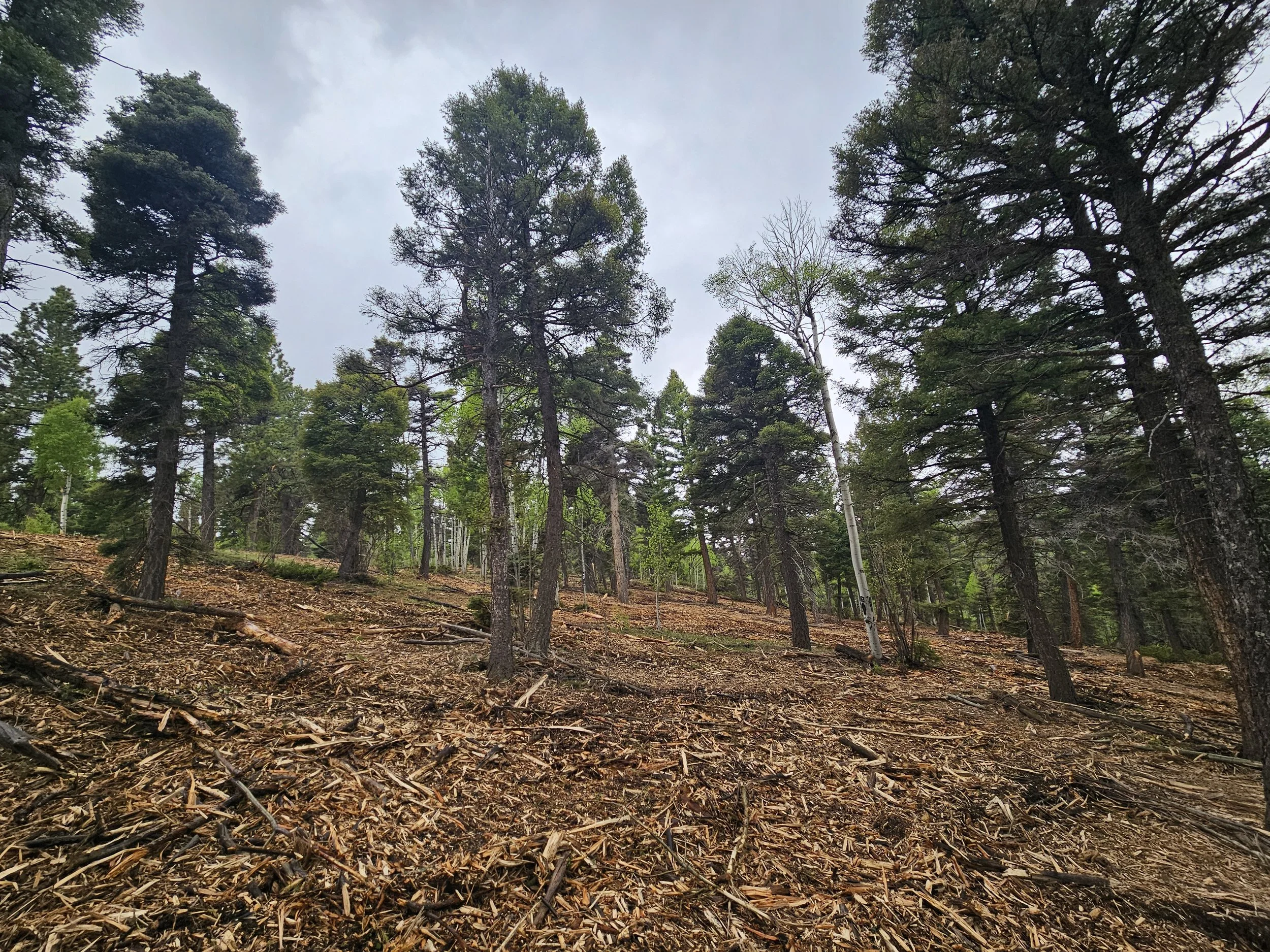
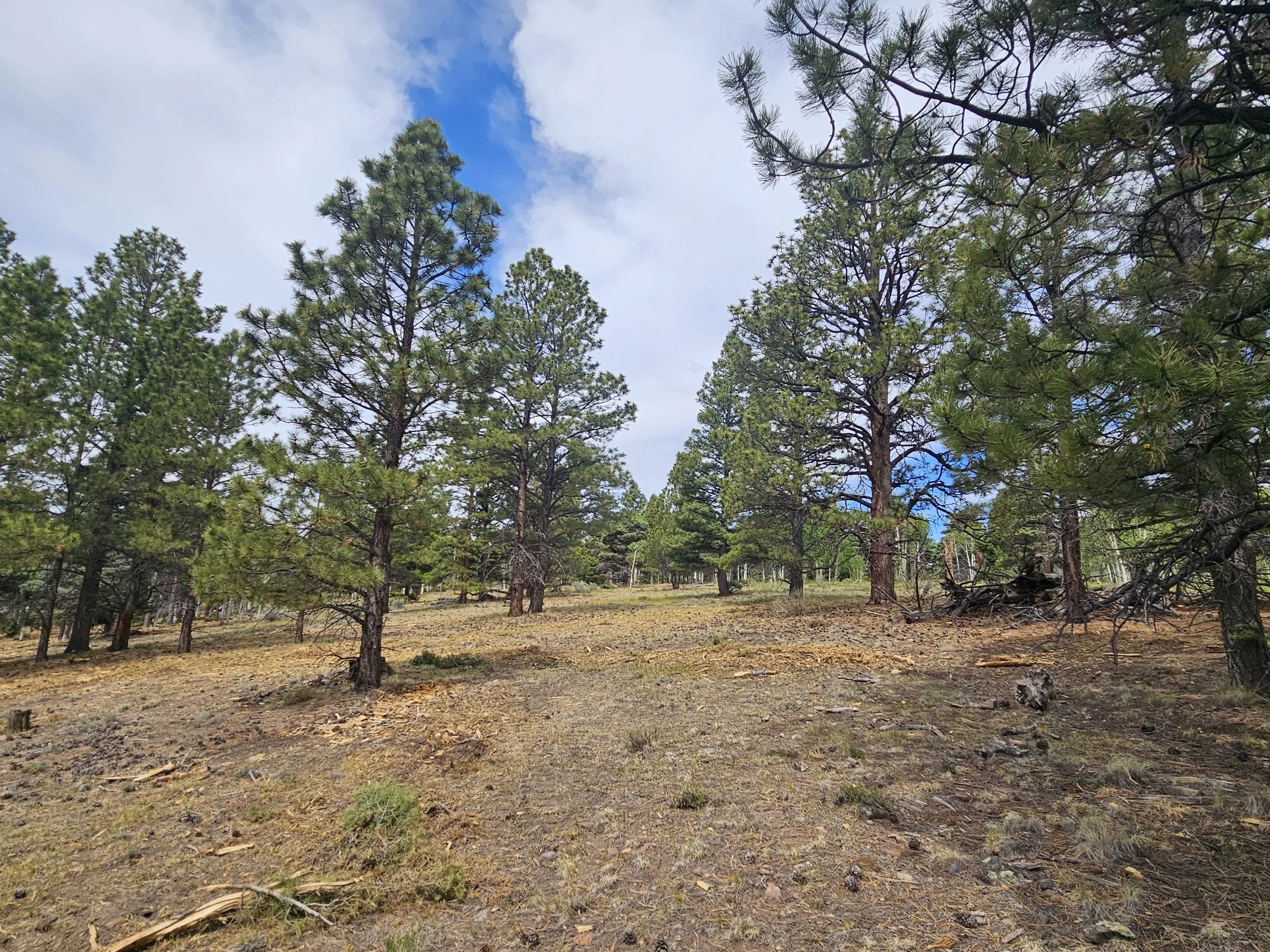
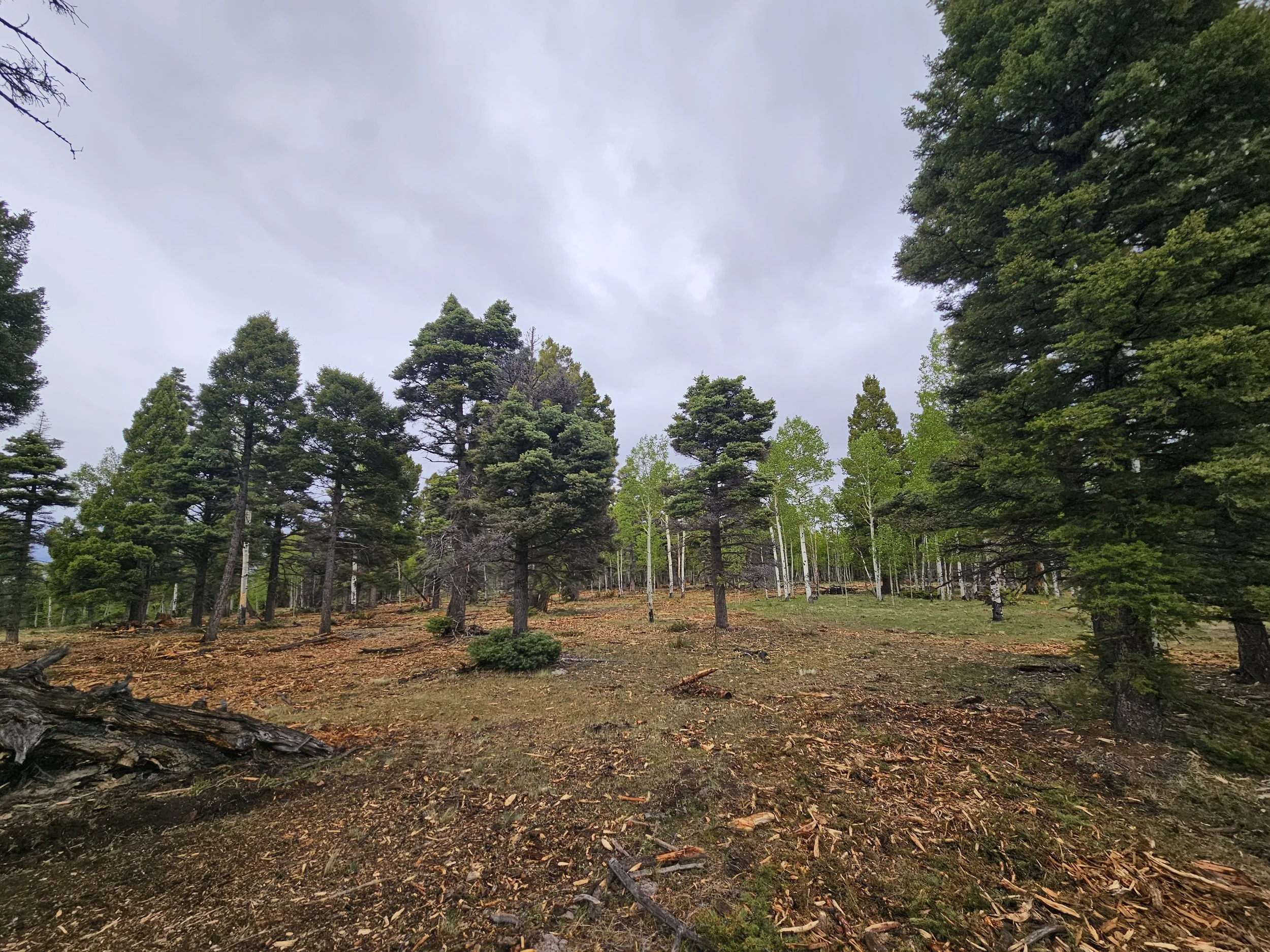
Conejos Mastication — Service work of 825 acres of dry mixed conifer forests. Primary objectives include enhancing forest health by removing western spruce budworm infested trees, reducing the risk of wildfire by creating fuelbreaks from removing ladder fuels and creating canopy separation and promoting ponderosa pine and aspen regeneration. Rio Chama CFLRP funded and administered by CSFS. Anticipated completion of phase 1 by December 2026 with additional work occurring in 2027.
Notch Vegetation Management — Stewardship work where the value of the wood removed is less than the expense of treatment due to the difficult terrain. CSFS will administer the contract to harvest the stands to reduce the impacts of both Douglas-fir beetle and western spruce budworm infested trees while restoring Ponderosa pine stands and encouraging aspen regeneration. CFLRP funded. Anticipated to start in 2027.
NEPA Assistance — Expedite environmental compliance with NEPA by contracting within Colorado State University to write an Environmental Assessment for the potential management of approximately 20,000 acres of dry mixed conifer forests on the RGNF so partners have a tool to address insect and disease outbreaks as they are occurring.
-
The joint efforts between the RGNF and CSFS via the Good Neighbor Authority has increased the number of staff at the CSFS Alamosa Field Office so we can more greatly serve 2-3-2 partners and community members. Coordination on GNA projects has increased the already good level of communication and project design between agencies. This increase in staffing and partnership has also led to opportunities to initiate cross-border treatments on adjacent private lands.
Learn more about the value of GNA and cross-boundary partner work: https://www.fs.usda.gov/r02/riogrande/newsroom/stories/partnerships-add-capacity-and-increase-efficiency-rio-grande
Rio San Antonio Stream Restoration
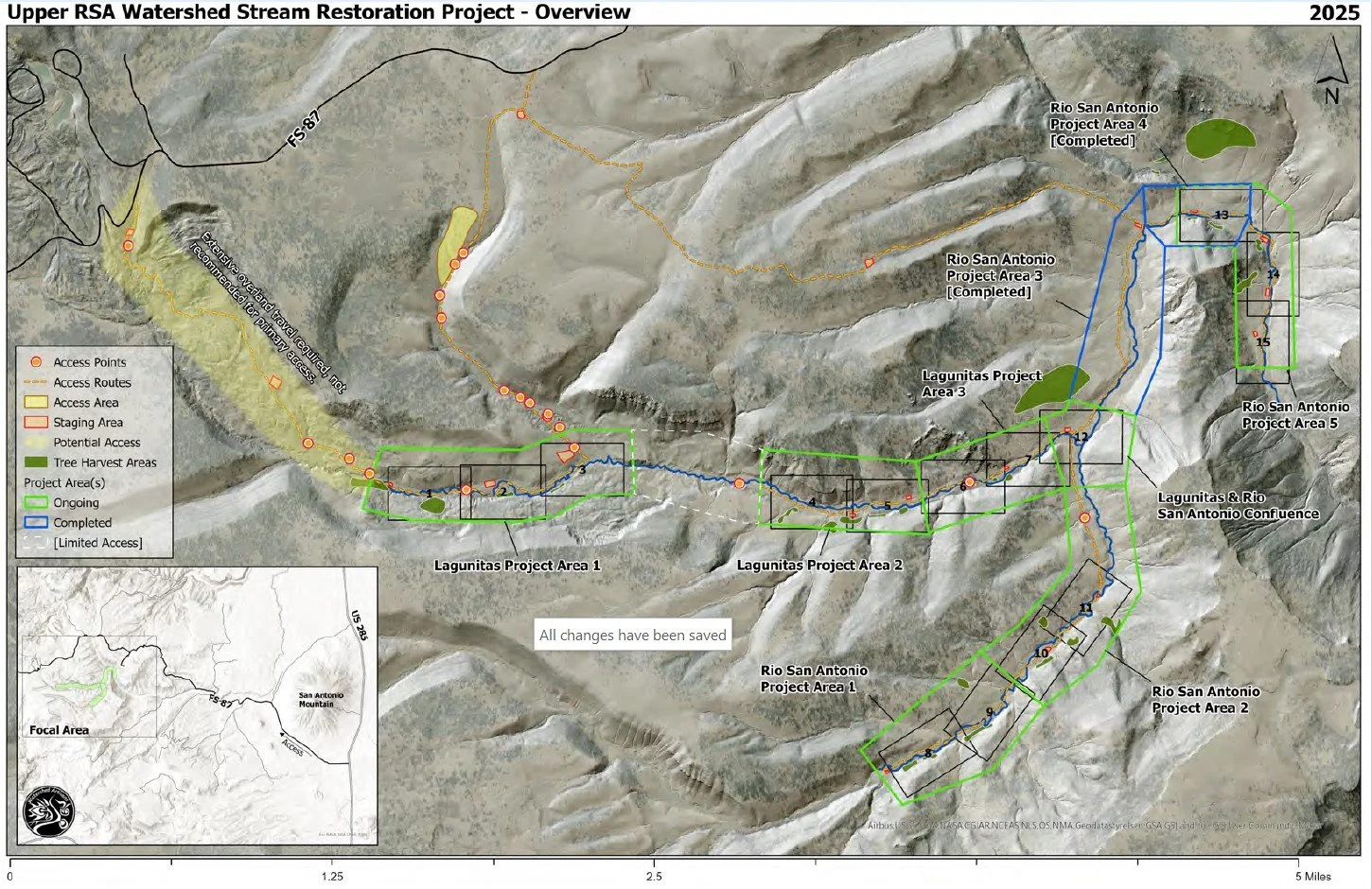
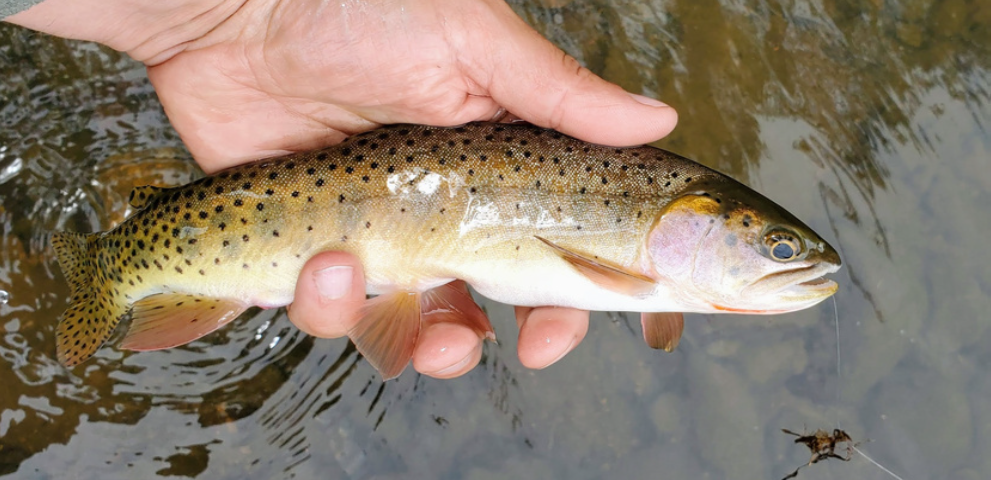
Located just south of the Cruses Basin Wilderness, the Rio San Antonio and Lagunitas Creek Stream Restoration Project started in 2022 when former Trout Unlimited staffer and 2-3-2 partner Garrett Hanks caught Rio Grande cutthroat trout in the main stem of Rio San Antonio. Working with the New Mexico Department of Wildlife they took fin clips and discovered that this was a genetically pure population of Rio Grande cutthroat. Since then, Trout Unlimited has worked closely with the Carson National Forest, the Rio Chama CFLRP, and Watershed Artisans to complete a multi-stage stream restoration project over 7 miles in the Rio San Antonio headwater streams.
Execution
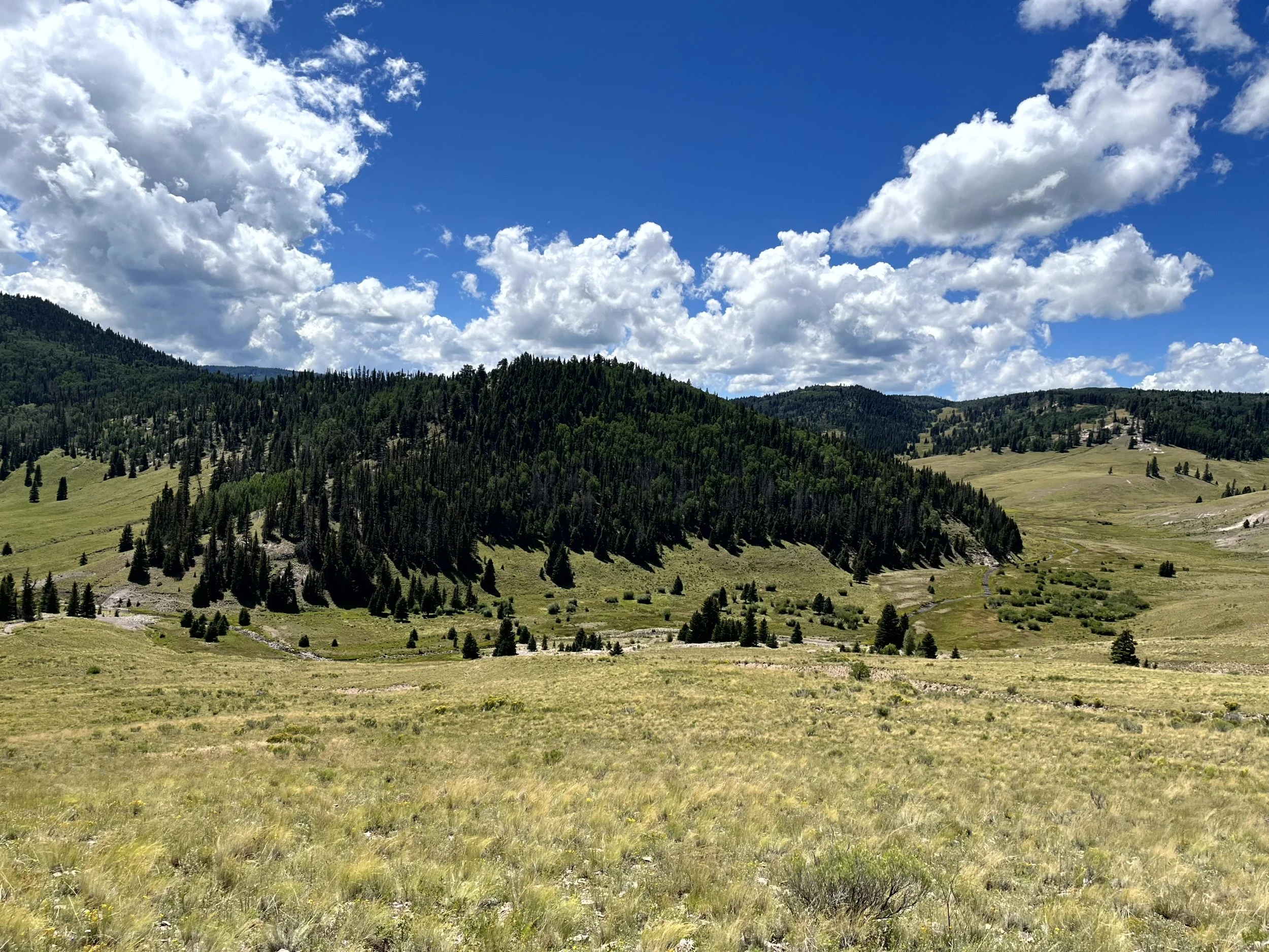
Trout Unlimited, the Carson National Forest, the Rio Chama CFLRP, and Watershed Artisans are completing a multi-stage stream restoration project across 7 miles of Rio San Antonio headwater streams to protect a genetically pure population of Rio Grande cutthroat trout.
-
To date the project has restored 2.74 stream miles and planted 1,700 willow poles. An additional 4.25 miles of work are planned. Partners have seen increased riparian vegetation, expanded floodplain engagement at medium to high flows, and increased habitat for trout. Furthermore, the work has increased native beaver activity, which can maintain the restoration benefits long into the future.
Rio Grande Water Fund
The Rio Grande Water Fund (RGWF) was created in 2014 to address the growing threat of catastrophic wildfire and its impacts on critical source watersheds. Since its inception, The Nature Conservancy, along with partners, have invested in restoring forested watersheds to help secure reliable water supplies for communities throughout the headwaters and for downstream users. Through collective action with 100+ signatories and other partners the RGWF uses strategic analysis to identify and implement watershed restoration in priority locations with the highest impact on water security.
-
In addition to supporting on-the-ground restoration, the Fund works to influence policy and attract investment needed to scale this work across the landscape. Within the San Juan-Chama Project headwaters, the RGWF is currently working to treat 15,000 acres of high-risk forest to achieve landscape-scale wildfire risk reduction and protect the quality, reliability, and delivery of this essential source water supply.
-
During its first decade, the RGWF supported more than 50 projects and helped create over 1,500 jobs across its 7-million-acre footprint. The Fund leveraged and deployed more than $10 million in public funding and, in partnership with 25 implementing organizations, achieved restorative treatment of more than 251,000 acres. Today the RGWF's primary focus is the watershed upstream of the San Juan-Chama Project, a critical water source for more than one million New Mexicans, including over 15 Tribes and Pueblos, two national laboratories, local communities, and regional businesses.
Northern New Mexico Water Fund
Forests and watersheds know no boundaries. Neither does our shared restoration of them. However, funding channels are often tied to specific land jurisdictions, adding to the challenges of cross-boundary project work. 2-3-2 Partners like the National Forest Foundation and their Northern New Mexico Water Fund are important for overcoming funding barriers.
-
The National Forest Foundation's Northern New Mexico Water Fund supports cross-boundary restoration work by providing funding that is not tied to specific land jurisdictions.
-
Community wildfire defense grants
The Community Wildfire Defense Grant (CWDG) program launched in 2022 in support of the National Cohesive Wildland Fire Management Strategy, focusing on communities in the wildland-urban interface.
-
Working with Colorado Senator Michael Bennet, the San Juan Headwaters Forest Health Partnership and Wildfire Adapted Partnership promoted the importance of funding for outreach to private landowners and the development of fire adapted communities. Within the 2-3-2 Partnership, multiple CWDG funded projects are underway. Led by The Nature Conservancy, Upper Chama Soil and Water Conservation District, and Wildfire Adapted Partnership, these projects are increasing defensible space around homes and water infrastructure.
-
Wildfire Adapted Partnership was the first organization in Colorado to be awarded CWDG funds. They lead outreach and mitigation cost-sharing to build fire adapted communities in Archuleta County, CO, reimbursing property owners up to 60% of the mitigation costs for defensible space. As of August 2026 this work has included:
192 educational events
10,833 participants
317 site visits
162 defensible space projects
471 acres mitigated for wildfire risk
305 structures protected